Warsaw Millionaires Up 83% in 10 Years: Europe's Fastest-Growing Wealth Hub Beats Monaco and Singapore
- Warsaw millionaire population grew by 83% between 2014 and 2024, the highest in Europe.
- Over 6,100 Warsaw residents reported annual incomes above PLN 1 million for 2025.
- The city is home to 32 centi-millionaires with over $100 million in liquid wealth.
- Growth is driven by real estate, financial services, and digital technology.
- Poland imposes a 4% solidarity levy on annual income exceeding PLN 1 million.
Looking for the European city that's minting millionaires faster than any other? Skip Zurich and Monaco. It's Warsaw. According to the World's Wealthiest Cities Report 2025 from Henley & Partners, a London-based investment migration advisory firm, the number of millionaires living in the Polish capital grew by 83% between 2014 and 2024.
Poland's tax authorities tell a similar story. For 2025, more than 6,100 Warsaw residents reported annual income above 1 million zloty (PLN).
How Fast Is Warsaw's Millionaire Population Growing?
The report came out on April 8, 2025, and is based on data from New World Wealth, a global wealth intelligence firm. It counts residents of each city with at least $1 million in liquid investable wealth.
With 83% growth in ten years, Warsaw outpaces every other European city on the list. In its ranking of the fastest-growing cities for wealth, Henley & Partners calls it "Europe's most rapidly developing metropolitan area for affluent individuals."
The city is also home to 32 centi-millionaires, people with more than $100 million in liquid investable wealth.
Warsaw vs. Abu Dhabi, Riyadh, Singapore and Monaco
On the list of cities where millionaires are multiplying fastest, Warsaw sits ahead of places most of us instantly associate with big money. Growth figures cover 2014–2024:
- Warsaw: +83%
- Abu Dhabi: +80%
- Riyadh: +65%
- Singapore: +62%
- Monaco: +58%
Globally, China's Shenzhen (+142%) leads the pack. Dubai (+102%) also ranks above Warsaw, along with six U.S. cities: Scottsdale (+125%), West Palm Beach (+112%), the Bay Area (+98%), Miami (+94%), Washington, D.C. (+92%) and Austin (+90%).
What's Driving Warsaw's Wealth Boom?
Henley & Partners points to four engines: a booming property market, banking and financial services, industrial production and digital technology businesses.
None of this happened in a vacuum. Over the past decade, Warsaw has turned into one of Central Europe's main business hubs, and Forbes has named it Europe's No. 1 city of the future. The picture isn't all rosy, though: Poland's labor market is cooling in 2026, with unemployment edging up.

related article
Forbes Names Warsaw Europe’s No.1 City of the Future for 2026
How Many People in Warsaw Earn Over 1 Million Zloty a Year?
Henley & Partners measures wealth. The tax office looks at something else: the annual income people report on their returns. The Polish weekly magazine Wprost requested the numbers from the 16 regional tax chambers of Poland's National Revenue Administration (KAS). Here's the picture for 2025:
- Poland overall: 40,300 taxpayers with income above PLN 1 million, up 5.4% from the previous year, when the figure was just over 38,000
- Masovian Voivodeship (Mazowieckie): more than 10,700, the most of any region
- Warsaw: more than 6,100
Put another way, roughly 15 out of every 100 Poles earning over a million zloty a year live in Warsaw.
Where Do Wealthy People Live Around Warsaw?
The money doesn't stop at the city limits. After Warsaw itself, three counties just outside the capital have the most Masovian taxpayers reporting more than PLN 1 million:
- Piaseczno: 715 taxpayers
- Pruszków: 452
- Wołomin: 401
If you're house hunting, these areas are worth a look alongside the central districts, especially if you want more space within easy reach of the city.
Thinking of Buying Property in Warsaw? What to Know First
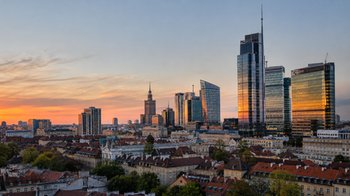
The new money is easy to spot: skyscrapers going up downtown, such as the Varso Tower, and strong demand for housing. Warsaw is no longer the bargain it was a decade ago, but for investors it remains one of Europe's liveliest property markets. A few basics before you sign anything:
- EU, EEA and Swiss citizens don't need a permit to buy real estate in Poland. Americans and other non-EU buyers generally don't need one for a standalone apartment either, under Article 8 of Poland's Act on the Acquisition of Real Estate by Foreigners. Houses and land are a different story: they usually require a permit from the Ministry of the Interior and Administration unless an exemption applies. The official government portal powroty.gov.pl lists the exemptions.
- Every purchase is signed before a notary as a notarial deed (akt notarialny).
- On a resale (rynek wtórny), you'll generally pay a 2% transfer tax (PCC), according to the official portal biznes.gov.pl. The notary collects it. First-time buyers can be exempt if they meet the conditions. On a new-build apartment bought from a developer, the tax is already baked into the price as VAT.
- Buying a portfolio? The same portal notes that the sixth and every subsequent apartment bought in the same development is taxed at 6%.
- Planning to take out a mortgage from a Polish bank? Ask up front what applies to foreign borrowers, since every bank sets its own criteria.
- You'll need a PESEL number (Poland's national ID number) for most dealings with banks and government offices.
Flying in to scout apartments? Here's how to get from Chopin Airport to downtown Warsaw.
Wealth vs. Income: What Do the Numbers Actually Measure?
The two sources measure different things, so their figures can't be compared head to head:
- Henley & Partners: looks at wealth ($1 million and up). You can be a millionaire without a big annual income.
- Polish tax office (KAS): looks at income in a single year (over PLN 1 million). Someone might cross that line just once, for example after selling a business or a stake in a company.
Either way you slice it, the takeaway is the same: money keeps flowing into Warsaw, and the city remains Poland's economic heart.
Key Facts
| Warsaw millionaire growth (2014–2024) | +83% (Henley & Partners) |
| Residents worth over $100 million | 32 |
| Report | World's Wealthiest Cities Report 2025, April 8, 2025 |
| Who counts as a millionaire | $1 million+ in liquid investable wealth |
| Comparison | Abu Dhabi +80%, Riyadh +65%, Singapore +62%, Monaco +58% |
| Income over PLN 1 million (2025), Poland | 40,300 taxpayers (+5.4%) |
| Masovian Voivodeship | More than 10,700 |
| Warsaw | More than 6,100 |
| Piaseczno / Pruszków / Wołomin | 715 / 452 / 401 |
| Solidarity levy | 4% on income above PLN 1 million |
| Apartment purchase by U.S. citizens | Generally no permit for a standalone apartment; notarial deed required |
| Transfer tax on resale | 2% (PCC); first-time buyer exemption if conditions are met |
FAQ
How much has Warsaw's millionaire population grown?
By 83% from 2014 to 2024, according to the Henley & Partners World's Wealthiest Cities Report 2025. That's the fastest growth of any city in Europe.
How many centi-millionaires live in Warsaw?
According to Henley & Partners, 32 people with liquid investable wealth of more than $100 million.
How many Poles earn more than 1 million zloty a year?
For 2025, 40,300 taxpayers nationwide. More than 6,100 of them live in Warsaw and more than 10,700 in the Masovian Voivodeship as a whole.
Which areas around Warsaw have the most wealthy residents?
After Warsaw come Piaseczno (715), Pruszków (452) and Wołomin (401), based on taxpayers reporting more than PLN 1 million.
Can an American buy an apartment in Warsaw?
Yes. A U.S. citizen generally doesn't need a permit to buy a standalone apartment in Poland, though houses and land usually do require one. The deal is signed before a notary, and resale purchases typically carry a 2% transfer tax.
Is Warsaw richer than Monaco or Singapore?
Not in total wealth. But it beats both on the growth rate of its millionaire population: +83%, compared with +62% for Singapore and +58% for Monaco over the same decade.
What is Poland's solidarity levy?
An extra 4% tax on the portion of annual income above PLN 1 million.
Sources
- Henley & Partners, World's Wealthiest Cities Report 2025 (press release, April 8, 2025) and Fastest-Growing Cities for Global Wealth
- Data from the 16 regional tax chambers of the National Revenue Administration (KAS), as published by Wprost
- Real estate purchases by foreigners: powroty.gov.pl
- Transfer tax (PCC): biznes.gov.pl and gov.pl
- U.S.–Poland income tax treaty: IRS