What to See in Thessaloniki: 7 Must-Visit Attractions
- Unique History: A blend of Roman, Byzantine, and Ottoman heritage recognized by UNESCO.
- Culture & Cuisine: Birthplace of Frappé coffee and home to Greece’s most exciting food scene.
- Atmosphere: Traditional Ano Poli meets a modern seaside promenade with the iconic “Umbrellas” installation.
Are you planning a vacation in Greece and looking for a place that perfectly combines the charm of a seaside destination with thousands of years of history? Thessaloniki, the country’s second-largest city, is a true gem on the Thermaic Gulf, captivating visitors in every season. It’s an ideal destination for an extended city break or a fascinating stop while exploring the region of Central Macedonia.
In Thessaloniki, time seems to move differently - here, monumental Byzantine, Roman, and Ottoman history naturally blends with a modern lifestyle, lively markets, and the aroma of freshly brewed coffee. The city, listed as a UNESCO World Heritage Site, offers a unique cultural mix best discovered during relaxed walks along the waterfront.
If you want to experience the authentic atmosphere of a Greek metropolis, taste some of the best regional cuisine, and see landmarks dating back to the age of emperors, this guide is for you. Here is a comprehensive overview of 7 must-see places in Thessaloniki that will help you fully appreciate the city’s magnetic appeal.
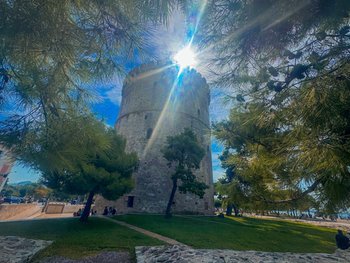
1. White Tower (Lefkos Pyrgos) – The Symbol of Thessaloniki
If you’re wondering what to see in Thessaloniki first, the answer is simple: the White Tower. While today it’s associated with seaside relaxation, its past is far darker. It was built by the Ottoman Turks (likely on Byzantine foundations) to strengthen the city’s port defenses.
-
History & interesting facts: In the 19th century, the tower served as a prison for Janissaries, and after their massacre, it earned the nickname “Tower of Blood.” The name was changed to “White Tower” in 1912, after the city was liberated and the structure was symbolically whitewashed with lime.
-
White Tower Museum: Each floor features interactive exhibits about the city’s history – from cuisine to trade. Narrow, winding staircases lead to the observation deck, offering panoramic views of the city center and the sea.
2. Ano Poli – The Picturesque Upper Town
Ano Poli is the only district that survived the Great Fire of 1917. It is the historic heart of the city and part of the UNESCO World Heritage list.
-
Traditional architecture: The distinctive houses feature overhanging upper floors (known as sachnisi), typical of Macedonian and Ottoman architecture.
-
Atmosphere: Walking here feels like a journey back in time. Narrow cobblestone streets and small tavernas serving local meze create an authentic Balkan vibe you won’t find in the modern parts of the city.

3. Kastra and Heptapyrgion - The Best Viewpoint in Thessaloniki
The defensive walls surrounding Thessaloniki once stretched for nearly 8 kilometers. The crown jewel of this system is Heptapyrgion, also known as the Fortress of Seven Towers.
-
City walls (Kastra): This is the perfect spot for a sunset walk. On clear days, you can even spot the snow-capped peak of Mount Olympus in the distance.
-
Prison past: Until 1989, the fortress served as a high-security prison. Today, its stark cells are open to visitors, standing as a powerful reminder of modern Greek history.
4. Rotunda and the Arch of Galerius (Kamara) – Roman Landmarks
These two monuments are the most important remnants of Roman Thessaloniki. They once formed part of the monumental palace complex of Emperor Galerius.
-
Rotunda: An architectural marvel with walls over 6 meters thick. It served as a pagan temple, a Byzantine church, and later a mosque (the city’s only surviving minaret still stands beside it). The interior is decorated with rare and stunning golden mosaics.
-
Arch of Galerius (Kamara): Covered in reliefs commemorating victory over the Persians. Today, it’s the most popular meeting point for students and young locals in Thessaloniki.
5. Basilica of Saint Demetrius (Agios Dimitrios)
This is the most important church in the city, dedicated to its patron saint. For lovers of sacred architecture, it is a must-see on the map of Thessaloniki tourist attractions .
-
Underground Crypt: Beneath the altar lies the place where, according to tradition, Saint Demetrius was imprisoned and executed. Discovered after the Great Fire, it now functions as a museum.
-
Artistic value: The basilica is famous for its rare 7th-century mosaics, which survived iconoclasm and numerous reconstructions.

6. Modiano and Kapani Markets - The Flavors of Greece
You can’t truly experience Thessaloniki without visiting its local markets. This is where the commercial heart of the city beats.
-
Kapani Market: A traditional bazaar where you can buy everything from fresh fish and olives to spices and woven goods. The atmosphere is lively and distinctly oriental.
-
Modiano Market: A recently restored market hall from 1922. Today, it operates as a modern culinary concept (a food hall), where traditional products meet contemporary Greek cuisine. It’s the perfect spot for lunch and tasting Greek cheeses or local wines.

7. Seafront Promenade and the Famous “Umbrellas”
The New Waterfront (Nea Paralia) is one of the longest and most beautiful promenades in Europe, stretching for over 5 kilometers.
-
Themed gardens: Walking along the coast, you’ll pass several landscaped parks, including the Garden of Memory, the Water Garden, and the Rose Garden.
-
“Umbrellas” installation: This artwork by George Zongolopoulos has become a modern symbol of the city. The metal umbrellas are beautifully illuminated after dark and create the most Instagram-worthy spot in all of Thessaloniki.

Why Visit Thessaloniki?
Thessaloniki is a city that surprises at every step. It’s less crowded than Athens, more authentic than many island resorts, and offers an exceptional balance between history, gastronomy, and seaside relaxation.
-
Perfect for a city break: Thanks to its compact city center, most major attractions can be explored on foot within two or three days.
-
Food capital of Greece: Thessaloniki is widely considered the culinary capital of the country, blending Greek, Ottoman, Jewish, and Balkan influences into one of the most exciting food scenes in Southern Europe.
-
Great base for day trips: From here, you can easily reach Mount Olympus, the beaches of Halkidiki, or the monasteries of Meteora.
Interesting Facts About Thessaloniki
-
The city was founded in 315 BC and named after Thessalonike, the sister of Alexander the Great.
-
For centuries, Thessaloniki was one of the most important Jewish cities in Europe, often called the “Jerusalem of the Balkans.”
-
It has more Byzantine churches than any other city in Greece, second only to Constantinople in the former Byzantine Empire.
Is Thessaloniki Worth Visiting?
Absolutely. Whether you’re interested in ancient history, vibrant street life, excellent food, or scenic seaside walks, Thessaloniki delivers an experience that feels both authentic and refreshingly local. It’s a city that doesn’t try to impress — and that’s exactly why it does.
Fun Facts About Thessaloniki You Should Know
Thessaloniki is a city full of contrasts and fascinating stories. Here are a few facts that will help you see it from a completely different perspective:
A Name Born from Victory
The city was founded in 315 BC by King Cassander, who named it after his wife, Thessalonike — the half-sister of Alexander the Great. Her name literally means “Victory over Thessaly.”
The “Second Jerusalem”
For centuries, Thessaloniki was a unique cultural melting pot. Until World War II, it was home to one of the largest Jewish communities in Europe, mostly Sephardic Jews expelled from Spain. The city was so important to Jewish life that it was known as “Madre de Israel” - the Mother of Israel.
Greece’s Unofficial Co-Capital
Although Athens is the official capital, Greeks often refer to Thessaloniki as Symprotevousa — the co-capital. It reflects local pride and the city’s historic role as the second most important center of the Byzantine Empire, right after Constantinople.
The Fire That Changed Everything
In 1917, a massive fire - reportedly started by accident in a small kitchen - destroyed nearly two-thirds of the city and left over 70,000 people homeless. This disaster reshaped Thessaloniki forever. The modern city center follows a planned, European-style layout designed by French architect Ernest Hébrard, setting it apart from the urban chaos of Athens.
The Birthplace of Frappé Coffee
Thessaloniki is the birthplace of Greece’s iconic iced coffee. During the International Trade Fair in 1957, a Nestlé representative mixed instant coffee with cold water in a shaker after failing to find hot water. The result? Frappé - now a summer symbol of Greece.

City of Saints and Philosophers
Thessaloniki is the birthplace of Saints Cyril and Methodius, the creators of the Slavic alphabet. It is also where Mustafa Kemal Atatürk, the founder of modern Turkey, was born. His childhood home now operates as a museum and is especially popular with Turkish visitors.
No Beaches in the City
Despite its seaside location and long waterfront promenade, Thessaloniki has no true swimming beaches within the city limits. Locals head to the Halkidiki peninsula or nearby coastal towns like Agia Triada, about 20 km from the center.


