Temple of Poseidon & Cape Sounion: Best Day Trip from Athens for Sunset
- Practical guide to Cape Sounion and the Temple of Poseidon (2026 update)
- Detailed transport options: car, KTEL buses, and organized tours
- Fee table: ticket prices in summer and winter seasons and EU youth discounts
- Calendar of free admission days for monuments in Greece in 2026
- Fascinating myths about the origin of the Aegean Sea name and the heroic Phrontis
- Photography tips: how to capture the golden hour and avoid crowds
Greece is a country where history casts a shadow on almost every step, but there are places where the past not only teaches but is truly breathtaking. Cape Sounion is exactly such a point on the map – majestic and absolutely photogenic. While the Acropolis is the heart of Athens, Sounion is its soul, offering an escape from the city bustle towards the endless blue of the Aegean Sea.
For many travelers, this day trip from Athens becomes the strongest memory of their holiday. It is here, just 70 km from the capital, that the white marbles of the Temple of Poseidon rise directly from the cliff, creating a panorama that resembles a frame from a big-budget movie about gods and heroes.
Mythological and Literary Foundations of Sounion
Sounion is not just about beautiful views; it is a "sacred" place (Hieron) that was absolutely unique in the consciousness of ancient Greeks. As early as Homer's third book of the "Odyssey", it was written about with reverent respect, describing the cape as "sacred Sounion, the headland of Athens." Here, the sacred mingled with the fate of heroes.
Apollo, Menelaus, and the Tragic Helmsman
One of the oldest stories links Sounion with the great return of the fleet from Troy. As King Menelaus's ships passed the cape, the god Apollo struck Phrontis – the legendary helmsman and son of Onetor – with his "painless arrows."
This event was of great importance: the King of Sparta had to stop the entire fleet to perform solemn funeral rites and raise a mound in honor of his fallen companion. It was these rituals that gave Sounion its sacred and heroic character. Interestingly, modern archaeologists have identified an oval stone circle (peribolos) near the sanctuary of Athena, which is considered a likely place of worship for Phrontis. It is an incredible feeling when specific field findings confirm an epic tradition from thousands of years ago.
Where does the name Aegean Sea come from?
The most iconic and emotional myth associated with Sounion is the so-called etiological (explaining the origin) explanation for the name of the Aegean Sea. This is where the finale of a tragic mistake between a father and son took place.
According to tradition, King Aegeus spent whole days on the high cliffs of the cape, looking out for Theseus's ship returning from Crete after the expedition against the Minotaur. The agreement was clear:
-
A white sail was to announce the victory and the hero's return.
-
A black sail meant Theseus's death.
Although the son defeated the monster, the grief over losing Ariadne on the island of Naxos made him forget to change the sails. Desperate Aegeus, seeing black sails on the horizon, threw himself off the cliff directly into the water. Since then, the sea has borne his name. This myth not only anchors Sounion in the world of great heroes but also brutally highlights the strategic role of the cape; it was a key observation point from which every movement of ships heading to Athens was monitored.
Tip for Explorers:
While walking through the sanctuary grounds, it’s worth glancing not only at the Temple of Poseidon but also at the foundations of the smaller sanctuary of Athena. That is where the traces of the cult of Phrontis, mentioned by Homer himself, are hidden.
Architecture of Power: How was the Temple of Poseidon built?
The Temple of Poseidon is not just picturesque ruins – it is an engineering masterpiece by Athenian builders from the 5th century BC. Perched at a height of approximately 60 meters above sea level, it proudly represents the mature Doric style. For ancient sailors, it was a "lighthouse" that heralded a safe return to the home port from afar.

Ancient Optical Tricks
The builders of Sounion used several clever techniques that make the temple look so unique:
-
Less is more: Instead of the typical 20 flutes (grooves) on the columns, they used only 16. The reason was brilliant in its simplicity: wider grooves better withstood the damaging effects of sea salt, and the columns gained a sense of massiveness, making them perfectly visible from the decks of ships.
-
Raw Elegance: Unlike many other temples, the entasis (a slight bulging of the column) was omitted here. Thanks to this, the structure has a raw, perfectly vertical silhouette that commands respect through its form.
An Interior Worthy of the Sea God
Although today we mostly see the external columns, the heart of the building was the naos – the cult hall, which housed a colossal 6-meter bronze statue of Poseidon. Imagine the impression: a powerful god with a trident gleaming in the torchlight, towering over the worshippers. The building also had a porch (pronaos) and a rear porch (opisthodromos), creating a classic, harmonious layout.
Sculptures That Told Stories
Despite the building being Doric, the architects incorporated elements of the Ionic style – a decorative frieze running above the entrance. The scenes carved in stone were not accidental:
-
Gigantomachy: The battle between gods and giants, symbolizing the triumph of order over chaos.
-
Centauromachy: The battle of the Lapiths and Centaurs – in antiquity, this was a clear metaphor for the recent victories over the Persians.
-
The Deeds of Theseus: These emphasized Athens' right to rule over all of Attica and the surrounding seas.
Today, most of these sculptures can be admired at the National Archaeological Museum in Athens and the museum in Lavrio. An interesting fact is that four drums of one of the columns made it all the way to England and currently adorn the Chatsworth House estate.
Marble That Defies Time
What strikes visitors most is the pristine brightness of the ruins. The secret lies in the material:
-
Local treasure from Agrileza: This marble contains almost no iron inclusions.
-
The Result? The stone does not turn yellow or corrode under the influence of sea salt. Even after 2500 years of exposure to extreme conditions, the columns retain their noble white color, which contrasts incredibly with the blue of the sky and sea.
Literary Trace: Lord Byron
Sounion has attracted great minds for centuries. One of the most famous guests was Lord Byron – the famous English poet. During his visit in 1810, carried away by admiration, he carved his name into one of the columns. Today, this would be considered vandalism, but for the Romantics, it was a proof of the highest adoration. To this day, tourists from all over the world try to spot this historical "tag."
The majestic silhouette of the temple served a psychological function: it was meant to demonstrate to anyone approaching the coast that they were entering the territory of a powerful, wealthy, and confident Athens. Here, at the junction of the elements, the Greeks gave thanks for victories and prayed for a calm sea.
The Most Famous Sunset in Greece
Sounion enjoys the reputation of having the most beautiful sunset in mainland Greece. As the sun hides behind the islands of the Saronic Gulf, the marble columns turn golden, and the sky takes on shades of crimson and orange.Tip: It’s worth staying on the hill for about 15-20 minutes after the sunset itself. That’s when the "blue hour" begins, and the crowds of tourists head for the buses, leaving space for quiet contemplation.
Getting to Sounion: How to plan your route?
The cape is about 70 kilometers away from Athens, and the road itself is part of the tourist adventure.-
Private Car (Best option): Renting a car is a great choice for those who value independence. The route passes through luxury resorts like Glyfada and Vouliagmeni, offering spectacular sea views almost the entire time. A car allows for spontaneous stops in wild coves that public transport doesn't reach.
-
Taxi or Transfer: This is the solution for those seeking maximum comfort, but you must expect higher costs. The standard price for a taxi ride from central Athens to Sounion is about 80 euros one way. It’s worth considering this option for larger groups to split the costs.
-
Suburban Bus (KTEL): If you’re traveling on a budget, choose the orange KTEL buses. They depart regularly from the center (near Syntagma Square and Pedion Areos). The journey takes a bit longer (approx. 2h), but it allows you to enjoy the coastal panorama without having to focus on the road.
- Organized Tours: Popular organized tours offer hotel pickup and a guide, which is a convenient solution for those who value time.
Opening Hours and Tickets (2025/2026)
When heading to meet Poseidon, remember one unique rule: here, time is measured not only by the clock but primarily by the sun. Below you will find the key parameters to help you avoid surprises at the sanctuary gate.
The Temple of Poseidon is open to visitors daily throughout the year. However, pay attention to the shifting closing hours – archaeologists adjust them to the sunset time so that everyone can experience the magic of this place in the best light.
| Parameter | Visit Details |
| Opening | 9:30 (daily) |
| Closing | Sunset (remember: last entry 20 min before!) |
| Ticket | 10 - 20 € |
|
|
|
When can you enter Sounion for free in 2026?
Greece offers several days a year when access to the most important monuments – including Sounion – is completely free. If you are planning a budget trip, check these dates:
- March 6 (Melina Mercouri Remembrance Day)
- April 18 (International Day for Monuments and Sites)
- May 18 (International Museum Day)
- October 28 (Ohi Day - National Holiday)
- The last weekend of September (European Heritage Days)
- The first Sundays of the month (from November to March)
Nearby Attractions – What to add to your plan?
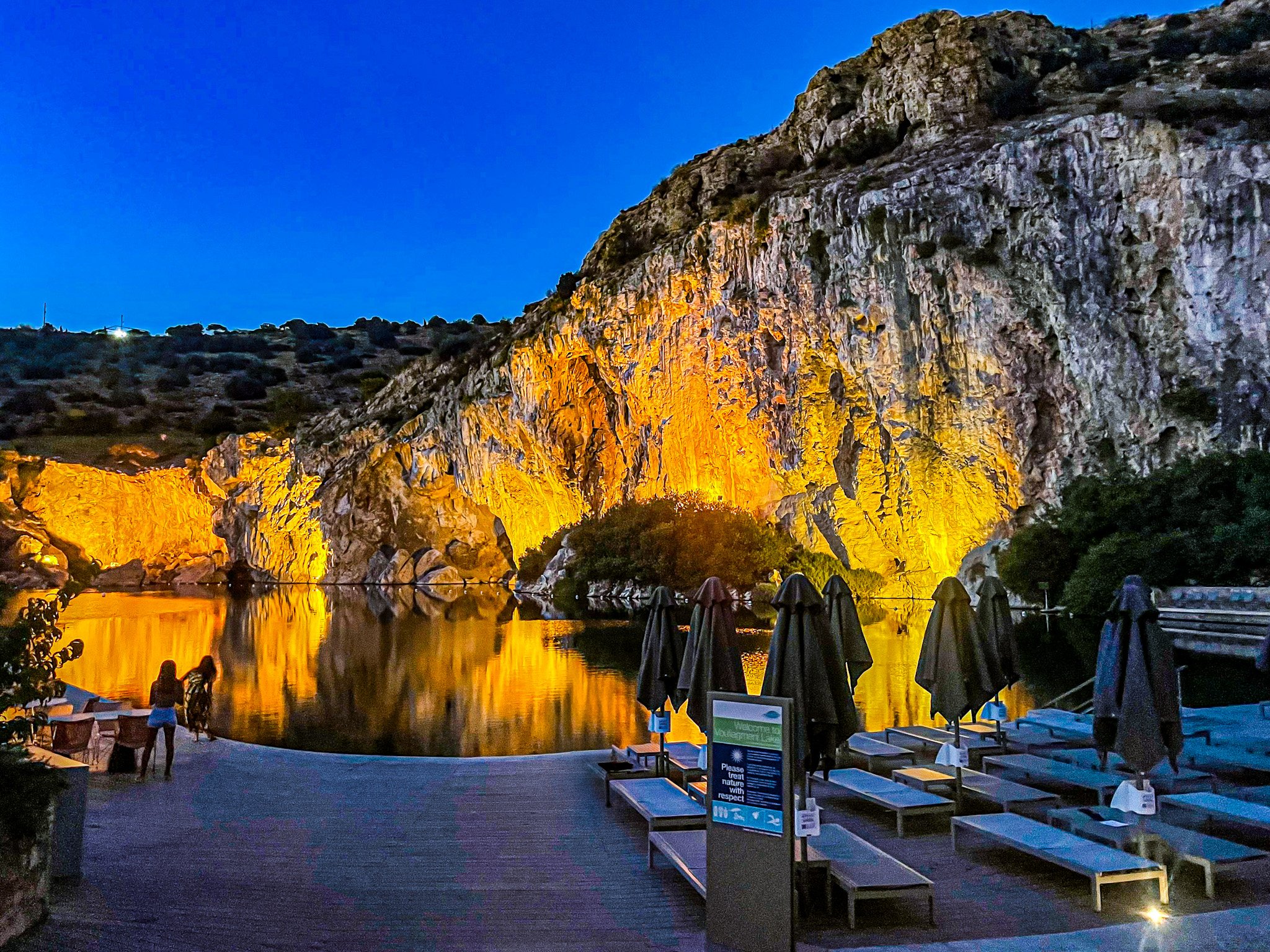
A trip to Sounion is worth enriching with a visit to Lake Vouliagmeni (a thermal spa under the open sky) and a walk through Sounio National Park, where the remains of ancient silver mines are located.
FAQ – Cape Sounion and the Temple of Poseidon
1. How much time is needed to visit Cape Sounion?
For visiting the archaeological site and the Temple of Poseidon itself, it’s worth reserving about 1–1.5 hours. If you plan to admire the sunset or have dinner at a nearby tavern, the entire trip with travel from Athens will take you about 4–5 hours.
2. What is the best time to arrive at Sounion?
The best time is 2 hours before sunset. This allows you to avoid the greatest heat, explore the ruins comfortably during the "golden hour," and secure a good spot for photography before the largest crowds arrive.
3. Can you get to Sounion by public transport?
Yes, orange KTEL Attikis buses run from Athens. They depart from near Syntagma Square and Pedion Areos. The journey takes about 2 hours and follows a scenic route along the Athenian Riviera.
4. How much does the entrance ticket to the Temple of Poseidon cost in 2026?
The price for a standard ticket in the summer season (April–October) is 10 €, and in the winter season (November–March) it is 5 €. People under 25 from the European Union usually enter for free upon presenting an ID.
5. Can you buy food and drinks on-site?
Directly at the entrance to the archaeological site, there is a cafe and a restaurant with a viewing terrace. However, prices there are higher than in central Athens, so it’s worth bringing a supply of water, especially on hot days.
6. Is there really Lord Byron’s signature at the Temple of Poseidon?
Yes, the famous poet's autograph is on one of the columns (it is usually fenced off to prevent further damage). It is one of the most popular tourist curiosities of the place, dating back to 1810.


.png)