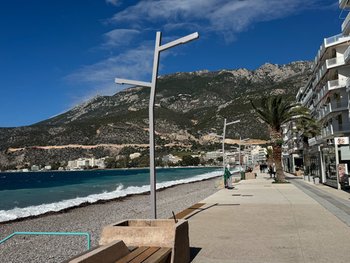
Loutraki & Beyond: Best Attractions, Thermal Spas & Seaside Ruins
- Loutraki is an interesting resort close to Athens and a great base for the Peloponnese, offering access to Blue Flag awarded beaches.
- Located just 50 miles (80 km) from Athens, travel is cheap and fast. Entrance to the monuments is free.
- Plan a visit to the Melagavi lighthouse at sunset to capture the most spectacular views.
Loutraki is one of those spots on the map of Greece that perfectly meets the needs of the modern traveler. On one hand, the city offers blissful relaxation in famous thermal waters and rest on wide, sun-drenched beaches (the water color here is truly mind-blowing), and on the other, it serves as an excellent base for exploring the most important monuments of the Peloponnese.
The resort, located just 50 miles (80 km) from Athens directly on the Gulf of Corinth, captivates not only with history and great infrastructure but also with unfading energy. Loutraki's fame as a spa is nothing new—already in antiquity, known as Thermae, this place was valued by Greeks and Romans for the beneficial health effects of local springs. Today, it is a modern resort that pulses with life all year round, combining holiday vibes with the cultural richness of the region once known as Peiraia.


Top attractions in the city:
-
Loutraki Thermal Spa: A modern complex where you can enjoy baths in warm mineral water flowing straight from the Gerania mountains. It's the perfect way to regenerate after a day of sightseeing.
-
Seaside Promenade: Miles of walking paths along a Blue Flag awarded beach. You'll find plenty of fish tavernas, ice cream parlors, and cafes here, where life goes on until late at night.
-
Loutraki Waterfalls: A beautiful installation in the city center, right next to the old thermal spring building. Nighttime illumination makes it one of the most photographed spots in the region.
-
Casino Loutraki: One of the largest entertainment venues in Europe, offering a luxurious atmosphere and a dose of excitement for adult travelers.
Heraion of Perachora: A brush with antiquity right by the sea
A real hit for every tourist is a visit to the Heraion, the sanctuary of the goddess Hera, located 9 miles (15 km) from Loutraki. It is a place where ruins of ancient temples meet the turquoise water of the bay directly.
What will you see at Heraion? (Historical Details)
Thanks to archaeological research, we know that this region, known in antiquity as Peiraia, was a key strategic point for ancient Corinth. It was here that Corinthian colonists stopped before expeditions to the west to offer sacrifices to the goddess Hera. During your walk, it is worth paying attention to specific objects that testify to the power of this place:
-
Evolution of Hera Temples: The first temple (the so-called Geometric Temple) was built as early as the late 9th century BC. It was a small building measuring 26 x 20 ft (8 x 6 meters) with a characteristic apsidal ending. In the 6th century BC, it was replaced by a monumental Doric structure, inside of which inscriptions dedicated to Hera Akraia were found. This temple survived intact until 146 BC when Roman legions destroyed the Heraion.
-
Double-Apsidal Cistern: This massive stone reservoir from the late 6th century BC is a true masterpiece of engineering. It is 70 ft (21.40 m) long and about 15 ft (4.60 m) deep, allowing it to store up to 300 cubic meters of water. The roof of the cistern rested on a row of seven central pillars, and the water stored in it was crucial for the survival of pilgrims on the dry cape.
-
Hestiatorion (Ancient Dining Hall): The ruins of a building from the 6th century BC show how the ancients celebrated communal meals. It consisted of two rooms, each accommodating 11 stone dining couches placed along the walls. A total of 22 people could simultaneously participate in ritual feasts here.
-
Sacred Pool: A pool with a depth of 10 ft (3 meters) served for the ritual purification of guests. Archaeologists discovered about 200 bronze vessels (phialai) and numerous terracotta figurines inside, which were offerings to the goddess.
-
Ancient Engineering and Chain Pump: Perachora was famous for advanced hydraulic systems. Around 300 BC, a unique chain pump mechanism driven by animals was used here, extracting water from deep tunnels. Nearby, there is also a circular building with a diameter of 100 ft (30 meters), which, according to ancient records, could have served as a temporary prison.
-
West Court: Initially, it was a square of religious and economic character, surrounded by polygonal walls from the 6th century BC. An interesting fact is that in Roman times, a farm was built on this area, where an ancient olive press and large storage jars (pithoi) were found.
-
Stoa and Altar: A two-story portico shaped like the letter gamma, dated to the late 4th century BC, provided shelter for pilgrims and served to display valuable votive offerings. Right next to it was an altar that combined the elegance of Doric and Ionic styles.


Practical information for visitors
To ensure your visit runs smoothly, remember the rules applicable on the Heraion site:
-
Protect the walls: It is strictly forbidden to climb on ancient wall remains.
-
Collect nothing: Taking any fragments of marble or pottery is strictly prohibited.
-
No smoking or eating: Smoking tobacco or consuming meals is not allowed in archaeological zones.
-
Animals: Dogs are not allowed on the site (with the exception of guide dogs).
-
Photos: You can take photos for personal use, but using a flash is not permitted.
Melagavi Lighthouse: The Cape's most photogenic spot
Completing the visit to the ancient sanctuary is a short walk up the rocky hill, atop which proudly stands the Melagavi Lighthouse (referred to by locals simply as Faros). It is one of the most beautiful and frequently photographed places in all of Greece, serving as an ideal viewpoint for the region's panorama.
Why visit Faros?
-
Spectacular views: The terrace of the lighthouse offers an unobstructed view of the entrance to the Gulf of Corinth, the strategic Rio strait, and the picturesque surroundings of Nafpaktos.
-
Strategic location: The lighthouse is located on the very tip of Cape Perachora, dominating over the ruins of Heraion and the crystal-clear waters of the bay.
-
Perfect sunset spot: For tourists visiting Loutraki, Faros Melagavi is a mandatory trip point in the late afternoon. The play of light on ancient columns and the rocky coast creates an unforgettable scenery here.
-
Historical context: Although the current lighthouse is a modern building, the place itself has served for millennia as a landmark for Corinthian sailors setting off on long expeditions towards Syracuse or Corfu.
Traveler's Tip: The path leading from the temple ruins to the lighthouse is short but rocky. It's worth wearing comfortable shoes to safely admire the panorama that has delighted travelers arriving at this edge of the "Land Beyond the Sea" for centuries.


Most important monuments around Loutraki
Choosing Loutraki as your base, you have some truly important tourist spots within arm's reach:
- Corinth Canal: An amazing cut separating the Peloponnese from the mainland. The bridges over the 260-foot (80m) abyss are a mandatory point on every map.
-
Ancient Corinth and Acrocorinth: Visiting the ruins of the city-state with the Temple of Apollo and hiking up the mighty Acrocorinth fortress, from where a panorama of two gulfs unfolds.
-
Monastery of Osios Patapios: Located high in the Gerania mountains. It offers peace, beautiful frescoes, and the best bird's-eye view of Loutraki.
-
West Court: A place where Roman settlers ran a farm, equipped with an ancient olive press.

Plan your adventure without stress!
Loutraki is not just a seaside vacation; it is a journey in time, which, thanks to great infrastructure and a wealth of monuments such as Acrocorinth or the Corinth Canal, remains in memory for years. It is a place where Greek hospitality meets history, creating a perfect mix even for the demanding traveler.
To squeeze the best out of your trip and avoid wasting time in lines, it is worth planning your sightseeing in advance. A great solution is the platform GetYourGuide - you will find there not only entrance tickets to the most important monuments but also atmospheric cruises on the Corinth Canal or meetings with guides who share stories unavailable in classic publications.