
Is the White Tower in Thessaloniki Worth Visiting? Everything You Need to Know
- White Tower (Lefkos Pyrgos): A 15th-century city icon, former Ottoman fortress, and prison, now a modern multimedia museum.
- Inside the Tower: 6 floors connected by a spiral ramp detailing the city's history, plus a panoramic observation deck.
- Practical Info: Current ticket prices, seasonal hours, and a list of free admission days in 2026.
When most people plan a trip to Greece, they picture the blue domes of Santorini or the majestic, rugged Acropolis in Athens. But if you’re looking for a place that pulses with life 24/7-where history isn't just locked in a glass case but written on every street corner - Thessaloniki will steal your heart.
It’s a vibrant port city where the aromatic spices of old-world bazaars mingle with the fresh breeze of the Thermaic Gulf, and where ancient Byzantine mosaics sit right next to chic, modern cafes.
The White Tower: A Symbol Known by Every Greek
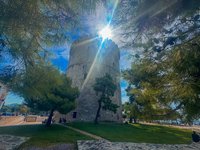
The moment you step onto the city’s famous waterfront promenade (Nea Paralia), you’ll see a structure that’s impossible to miss. Sturdy, proud, and imposing, the White Tower (Lefkos Pyrgos) looks like it was plucked straight from a big-budget medieval movie.
Its rugged stone walls have stood guard for centuries, serving as a silent witness to the rise and fall of great empires. But before it became a bright symbol of freedom, it underwent a dramatic transformation—evolving from an Ottoman fortress to a dark prison known as the "Tower of Blood," and finally into today's multimedia window into Greek history.

A 15th-Century Architectural Masterpiece
While the tower might look simple at first glance, it is a masterclass in Ottoman military engineering. It was constructed shortly after Sultan Murad II captured the city in 1430.
What makes it so unique?
-
Massive Proportions: The tower stands nearly 111 feet tall (34 meters) with a diameter of about 75 feet (23 meters). It was a colossus designed to command respect from anyone approaching the port by sea.
-
Solid Construction: Built using stone, brick, and durable lime mortar, it has survived centuries of sieges and earthquakes.
-
The Stairless Interior: Instead of traditional stairs, the interior features a wide, spiral ramp stretching across six levels. This made it much easier to haul cannons and supplies to the upper floors.
A Dark Past: The "Tower of Blood"
Long before the tower was a trendy meeting spot, its name inspired paralyzing fear. In the 19th century, the building served as a notorious prison where rebellious Janissaries were held and executed.
Did you know? Due to the frequent executions and the blood that stained its walls, locals called it Kanli Kule, or “The Tower of Blood.”
The makeover happened in 1883. To refresh the city's image, the Sultan ordered the tower to be whitewashed. This simple act gave it a new name - The White Tower and a completely new lease on life in the public imagination.
Modern History Within Ancient Walls
Today, the White Tower is managed by the Museum of Byzantine Culture. Forget dusty rows of boring artifacts - the exhibition is fully multimedia and interactive. Through sound installations and projections, you’ll discover how the city’s layout changed over the centuries and how East met West in these streets.
A View That Explains the City
The highlight of any visit is the view from the very top. From the observation deck, you can truly appreciate Thessaloniki’s unique urban layout:
-
A Collision of Eras: Ancient street grids flow seamlessly into the modern waterfront architecture.
-
The Sea Horizon: The view of the Thermaic Gulf makes it clear why Thessaloniki has always been the "gateway to the world" for the Balkans.
-
City Vibe: From up here, you’ll hear the hum of cafes and feel the energy of a metropolis that never sleeps.
White Tower: Practical Info (2026)
When planning your visit, keep in mind that opening hours and ticket prices in Greece can change based on the season.
Opening Hours
-
Summer Season (April 1 - October 31): Daily 8:00 AM - 8:00 PM.
-
Winter Season (November 1 - March 31): Daily 8:30 AM - 3:30 PM.
-
Last entry is usually 20 minutes before closing time.
Ticket Prices
-
General Admission: €6 (Summer) / €3 (Winter).
-
Reduced: €3 (for non-EU seniors over 65 and non-EU students).
-
Free Admission: EU youth up to age 25 (with ID) and all visitors on specific "free days."
What to See Nearby? (Within 15 Minutes)
Once you’re at the White Tower, you don't have to go far for more attractions. Add these to your itinerary:
-
Alexander the Great Monument and "The Umbrellas" (Zongolopoulos): Walk south along the promenade for about 5-10 minutes. You’ll find the city’s most Instagrammable spot. The modern metal umbrella installation looks incredible, especially at sunset.
-
Museum of Byzantine Culture: Located just 400 meters from the tower, this is one of Greece's premier museums. It’s worth visiting as much for its minimalist architecture as its collection.
-
Arch of Galerius (Kamara) and the Rotunda: Head uphill from the tower via Ethnikis Aminis street (approx. 12-min walk). You'll reach the massive Roman triumphal arch and the Rotunda—Thessaloniki’s oldest building, which has served as a temple, church, and mosque.
-
The Waterfront (Nea Paralia): The perfect place to grab a frappé or a freddo espresso at one of the many cafes overlooking the sea.

How to Get to the White Tower: Transportation
The White Tower is located right in the heart of the waterfront, making it very easy to find regardless of where you're staying.
-
On Foot: If you're walking from downtown (Aristotelous Square), it’s a pleasant 10-15 minute stroll east along the water.
-
By Bus: There is a bus stop named Lefkos Pyrgos right by the tower. Tourist routes stop here, including the popular Bus Line No. 50 (Cultural Line), which loops around the city's most important landmarks.
-
By Car: This is your biggest challenge. Parking near the tower is nearly impossible. Your best bet is to use the underground paid parking at Eleftherias Square or near Helexpo and walk the short distance to the tower.

Important Visitor Information
Before you buy your ticket, keep these two technical points in mind:
-
Accessibility: Due to its historic nature and the spiral ramp instead of an elevator, the tower’s interior and exhibitions are not wheelchair accessible and may be difficult for those with significant mobility issues.
-
Audio Guides: The museum offers audio systems (often accessible via smartphone) to help non-Greek speakers navigate the multimedia exhibits.
Free Admission Days (Save the Dates!)
If you're looking to save on admission, plan your visit for one of these dates when entry to the White Tower is free for everyone:
-
March 6 (In memory of Melina Mercouri),
-
April 18 (International Day for Monuments and Sites),
-
May 18 (International Museum Day),
-
The last weekend of September (European Heritage Days),
-
October 28 (Ohi Day - National Holiday).
Is the White Tower Worth the Visit?
Absolutely - as long as you want to see it from the inside and have it in your budget. It’s more than just a landmark; it’s a place that helps you understand the complex soul of Thessaloniki, its history, and its multicultural past. The multimedia exhibition and the climb to the top provide a much richer picture of the city than just a walk around the outside.
However, if you’re mostly just looking for a beautiful skyline view and the history isn't your priority, you should know that you can see equally spectacular views for free from Ano Poli - the historic upper town. From there, the city and the Thermaic Gulf look just as stunning, especially during the golden hour.
After your tour (or instead of it), make sure to head over to the nearby Alexander the Great monument. That’s where the city’s social heart beats, and the view of the White Tower lit up after dark is nothing short of magic.


.png)
